- Client
- Kingston University
- Site
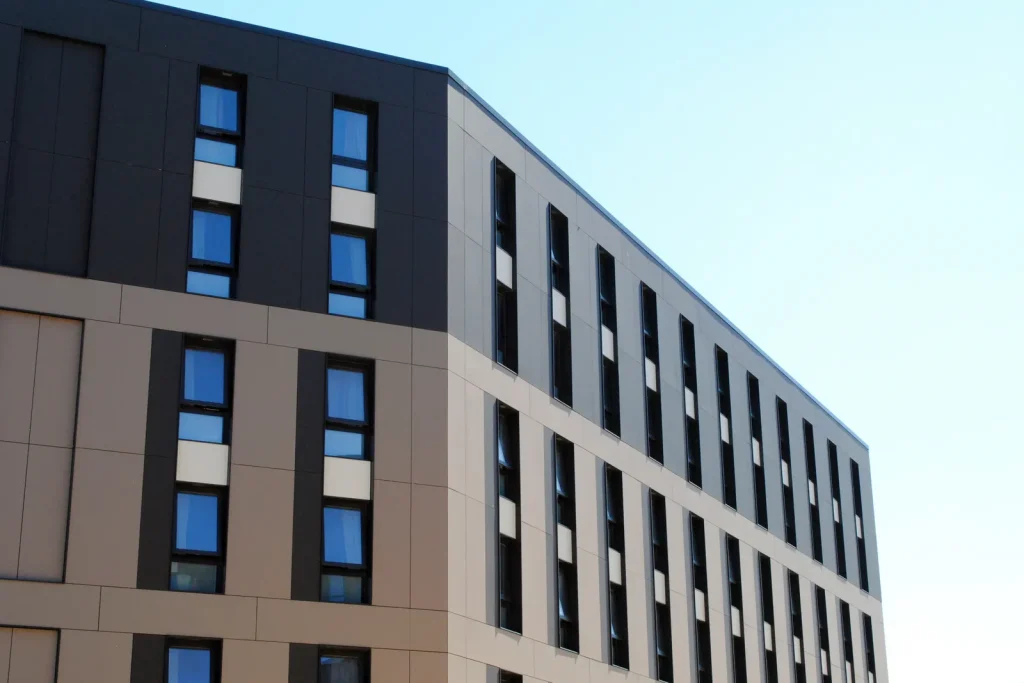
- Academic buildings at Uni of Kingston and Clayhill accommodation campus
- Scope
- Installation and remediation of passive fire protection, incl. fire doors
- Value
- £400,000
Summary of the project
Adaston performed installation of fire doors and firestopping in the university’s Kingston Hill main building as well as the Clayhill student accommodation campus. These works took place in a wide variety of multi-purpose spaces, such as theatres, student bedrooms, laboratories and high-security areas, each with their own unique challenges. Additionally, all properties were fully occupied throughout the works. As a result, this project required specially adapted programming to ensure minimum disruption, as well as careful contingency planning to maximise our time on site.
We rose to these challenges, and as a result of our success in these works on time and on budget, we were invited to tender for the phase 2 works.
Success at a glance
-
Over the project, 171 fire doors were remediated or replaced
-
More than 1500 data logging ‘pins’ completed on our specialist software, Bolster
-
Bespoke project delivery plans were produced to account for the number of stakeholders
How we delivered it
-
Phase 01
Pre-start phase
Before works commenced, we organised a pre-start meeting during which expectations were agreed, key details were shared, and extensive contingency planning took place to ensure smooth running of the project. By meeting before works commenced, we were able to get all key stakeholders on board from the start
-
Phase 02
Installation phase
Dynamic schedulingDuring the installation, we aimed to minimise disruption to students whilst making the most of our time on site, To do this, we employed dynamic scheduling. This method identifies areas with high risk of access disruption and corresponding “fall back” zones. High risk areas are prioritised, and if access is unexpectedly disrupted, operatives will pivot to working in the “fall back” zone, meaning time is not wasted. At the Clayhill accommodation campus, residential bedroom doors were identified as high risk, and communal areas in the same block served as “fall back” areas.
-
Phase 03
Reporting
Throughout the project, records of installations and remediations were continually kept up to date on our specialist software, Bolster, giving the University of Kingston total, transparent oversight on service records.
-
Phase 04
Handover phase
Upon completion of works, we produced a full Operations and Maintenance pack for all works completed, which included details of installed products, reports with before and after photography, and all information required for compliance.
Lessons learned
-
Contingency planning ensures success
Working in such large, fully occupied and fully operational sites, it was vital to plan for potential unexpected access issues which would prevent working being completed on time. To do this, we factored in “fall back” areas, for example communal areas in the Clayhill accommodation blocks. If an unforeseen access issue arose (e.g. no access to a bedroom), joiners could be reassigned on the fly to a communal area or similar—minimising lost time. Consequently, Adaston was able to complete all works on time, even in changing circumstances.
-
Collaboration during the pre-start phase is vital
Due to the wide potential for scheduled (e.g. university events) and unexpected (e.g. on-the-day lack of access) disruption to our work, collaboration with the University of Kingston teams during pre-start was crucial to project success. By gathering information about potential issues, planning around them, and working with the university to produce bespoke delivery plans, we were able to minimise disruption and maximise efficiency.